Hard Water & Water Quality
Las Vegas Hard Water: Do You Need a Water Softener?
November 25, 2026
Southern Nevada has some of the hardest tap water in the country. Here's how hard it really is, what it does to your pipes, fixtures and water heater, and how to tell whether a water softener is worth it for your house.
Most homes in Las Vegas and Boulder City are better off with a water softener, because the local water runs about 16 to 17 grains per gallon, which counts as very hard. The Dam Plumber in Boulder City, NV sells and installs water softeners and will tell you straight whether your house needs one.
How hard is the water in Las Vegas and Boulder City?
Very hard. The Las Vegas Valley Water District lists its water at 280 parts per million, or 16 grains per gallon, and calls it very hard. Boulder City's water quality report puts the city's water at about 17 grains per gallon. The U.S. Geological Survey calls anything over 180 parts per million (about 10.5 grains) very hard, so the whole valley is well past that line.
The reason is where the water comes from. Most of the valley's water, and Boulder City's, comes out of Lake Mead, which is fed by the Colorado River. On the way down, the river picks up calcium and magnesium. The water district says those minerals pose no health risk. They're a plumbing problem, not a safety one.
What does hard water do to your plumbing?
It leaves mineral scale behind wherever water sits, dries or gets heated. Some of it you can see. Most of it you can't:
- White spots on dishes, glass and shower doors
- Crust on faucet aerators and shower heads, and spray that goes crooked
- Soap and shampoo that won't lather
- Scale settling in the bottom of a tank water heater, which is a lot of the popping and rumbling you hear
- Scale building up inside a tankless unit, one of the more common reasons they start acting up
- Faucet cartridges, toilet fill valves and shower valves wearing out sooner than they should
Leaks are a different story. Pinholes in copper water lines come from corrosion inside the pipe, which we covered in what causes pinhole leaks in copper pipes.
Is a water softener worth it in Las Vegas?
For most houses here, yes. At 16 to 17 grains, the scale adds up to real wear on your water heater and fixtures. It's still not the right call for every house, and we'll say so. A softener is usually worth it when:
- You plan to stay in the house for a while
- You're putting in a new water heater and want it to last
- You're already fighting spots, crusty fixtures and a rumbling tank
It can wait if there's a bigger plumbing repair to handle first. And a softener won't save a tank that's already rusted through. Our water softener installation page covers what we sell, install and service.
What's the difference between a water softener and a water filter?
A softener takes out hardness. A filter cleans up what you drink. They solve different problems, and a lot of houses out here end up with both.
| Water softener | Water filter | |
|---|---|---|
| What it takes out | Calcium and magnesium, the minerals that make water hard | Chlorine taste and smell, sediment and other impurities, depending on the filter |
| What you notice | Less scale, fewer spots, soap that lathers | Better tasting water |
| Helps your water heater | Yes, it keeps scale out | No |
| Where it goes | On the main line, usually in the garage | On the main line, or under the kitchen sink for reverse osmosis |
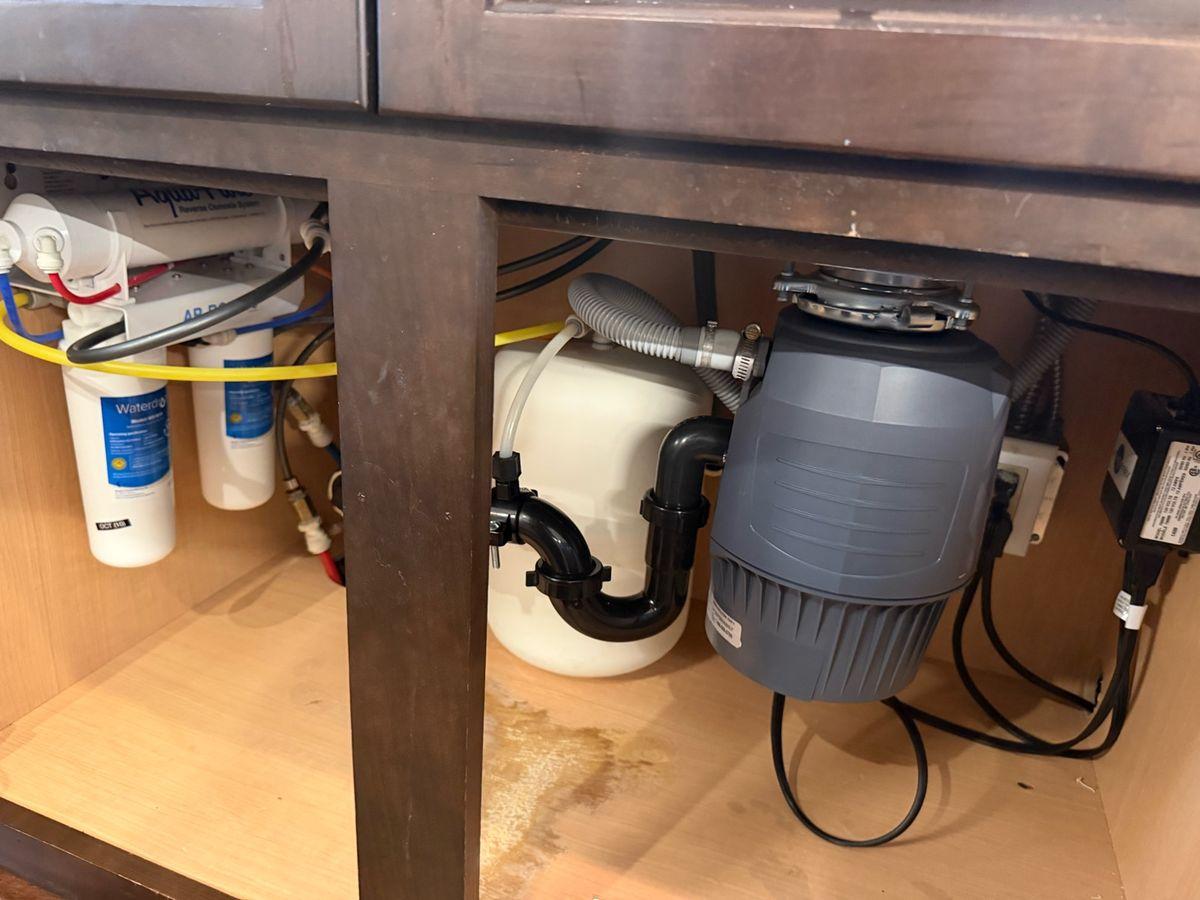
If taste is your main complaint, a reverse osmosis system under the kitchen sink may be all you need. Our water filtration page covers whole-house filters and reverse osmosis.
What does a water softener install involve?
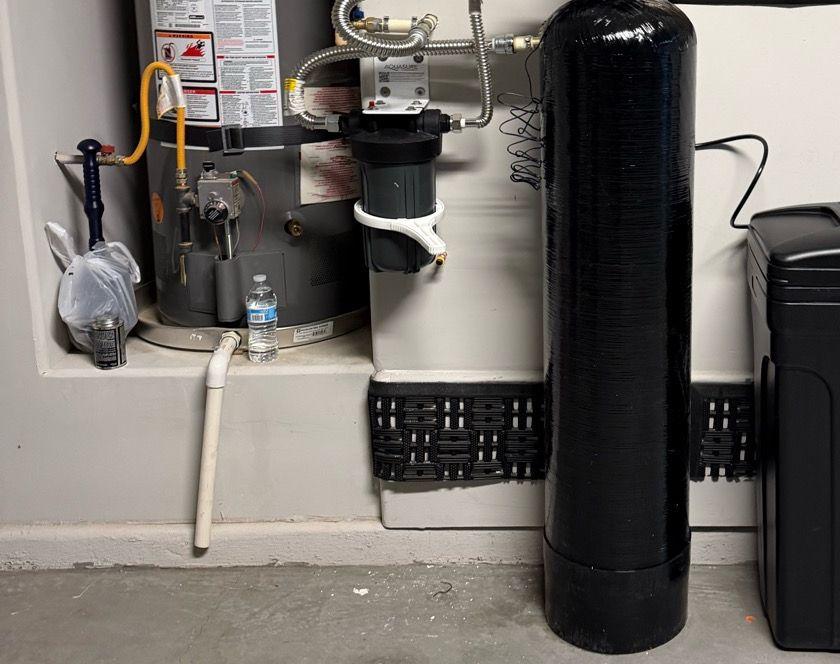
Most softeners go in the garage where the main line comes in, often right next to the water heater. Here's how it goes:
- We look at where the water comes into the house and where the water heater sits.
- We check for a drain for the discharge and room for the brine tank.
- You get the price before we start.
- We plumb the softener into the main line with a bypass valve, so it can be taken out of service when you need to.
- We set it up, run it and show you how it works.
If we're already replacing a water heater or putting in a tankless water heater, we'll mention a softener as an option. We won't push it. You decide.
The bottom line
Las Vegas and Boulder City water is very hard, about 16 to 17 grains per gallon, and that scale ends up in your water heater, fixtures and valves. A softener is one of the simpler ways to slow that down. Nobody here works on commission, so you'll get a straight answer on whether your house needs one.
Tired of scale and spots? Call us at 725-254-0089 or send a request. We put softeners in around Boulder City, Henderson, Las Vegas and northwest Arizona.
Quick Answers
Is Las Vegas tap water safe to drink if it's hard?
Yes. The Las Vegas Valley Water District says the calcium and magnesium that make the water hard pose no health risk. Hardness is a plumbing and cleaning problem, not a safety one.
How hard is Boulder City water?
About 17 grains per gallon, according to the city's water quality report. That's in the very hard range, a little harder than most of the Las Vegas Valley.
Does a water softener help my water heater?
It can help a new one last by keeping scale out of the tank or tankless unit. It won't fix a tank that's already rusted through.
Do I need both a water softener and a water filter?
Not always. A softener handles hardness and a filter handles taste and smell. Plenty of houses here end up with both, and we'll tell you if one will do.
Do you sell water softeners or just install them?
Both. We sell and install water softeners, so you deal with one company from start to finish.
Do you warranty water softener installs?
Yes. Workmanship is warrantied for one year in Nevada and two years in Arizona.
Want Us to Take a Look?
Upfront price before we start. Nobody here works on commission.