
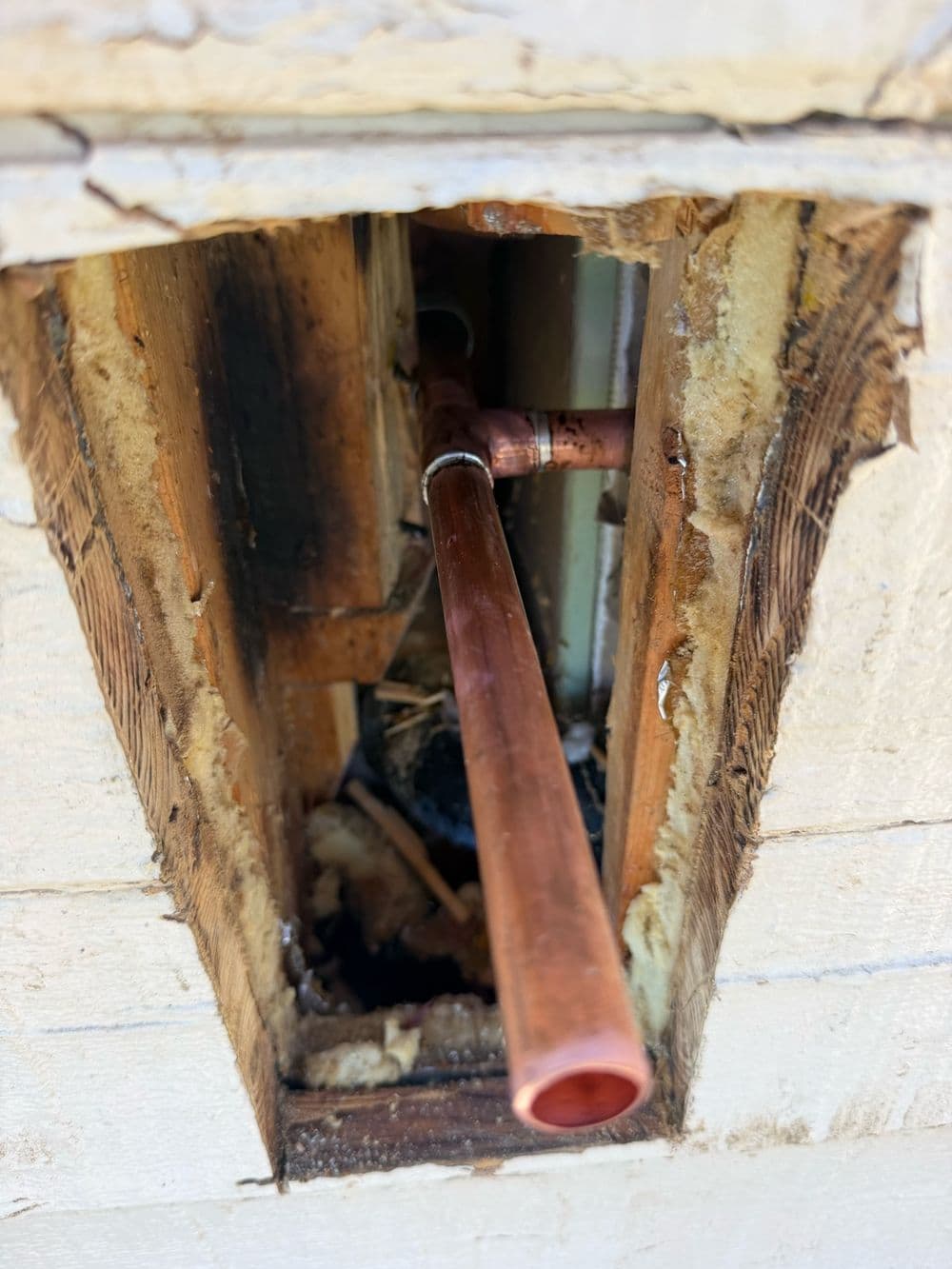
A pinhole leak is a tiny hole that corrosion eats through a copper water line. Here's what causes them, how to spot one, and when it makes sense to fix the one leak or start thinking about a repipe.
Pinhole leaks in copper pipes come from corrosion that starts inside the pipe. Water chemistry, water moving too fast, high pressure and debris left from the original install all play a part. The Dam Plumber in Boulder City, NV fixes a single pinhole as one repair and only talks repiping when leaks keep coming back.
What is a pinhole leak?
A pinhole leak is a hole about the size of a pin tip in a copper water line. It starts on the inside of the pipe, where you can't see it, and works its way out until water seeps or sprays through.
Water lines are under pressure all day, so even a tiny hole can soak drywall, framing and insulation before anybody notices. They tend to show up inside walls and ceilings, and in lines under a slab, where nobody's looking.
What causes pinhole leaks in copper pipes?
Corrosion causes them. Copper forms a thin protective layer on the inside of the pipe. When something wears that layer away in one spot, corrosion digs a pit there until it goes all the way through. These are the usual culprits:
- Water chemistry. Water that's acidic or carries a lot of disinfectant can attack the inside of the pipe over the years.
- Water moving too fast. Undersized lines, or a recirculation pump pushing water hard all day, can wear through the pipe at elbows and tees. That's called erosion corrosion.
- High water pressure. Plumbing codes generally call for a regulator when street pressure runs over 80 psi. Without a working one, every thin spot and fitting takes extra stress. Our water lines and pressure regulator page covers that side of it.
- Debris and leftover flux. Sand, grit or soldering flux left in the line when it was installed can settle in one spot and eat at the pipe.
- Age. Copper that's been in service for decades is simply thinner than it was the day it went in.
Most of the time it's more than one of these working together. That's why a house that's had one pinhole often gets another. Drain lines wear out in their own way, and we covered that in why cast iron drains fail in older homes.
What are the signs of a pinhole leak?
Usually you see the water damage before you ever see the hole. Watch for these:
- A water bill that jumped with no change in how you use water
- The water meter moving when everything in the house is off
- Stains, bubbling paint or soft drywall on a wall or ceiling
- A hissing sound inside a wall when nothing is running
- Green or blue crust on copper you can see, a sign of corrosion
If you're seeing any of that and can't find the source, start with leak detection, so only the right spot gets opened up.
Should you repair a pinhole leak or repipe?
Fix one pinhole as one repair. Start talking about a repipe when leaks keep showing up in different spots. Here's how we look at it:
| Repair the leak | Repipe | |
|---|---|---|
| How many leaks | One, or the first in years | Several, in different spots |
| Condition of the pipe | The rest of the line looks solid | Corrosion, crust or pitting all over |
| What it fixes | That one hole | The whole run, or the worst sections |
| Cost today | Lower | Higher, but it ends the repeat repair bills |
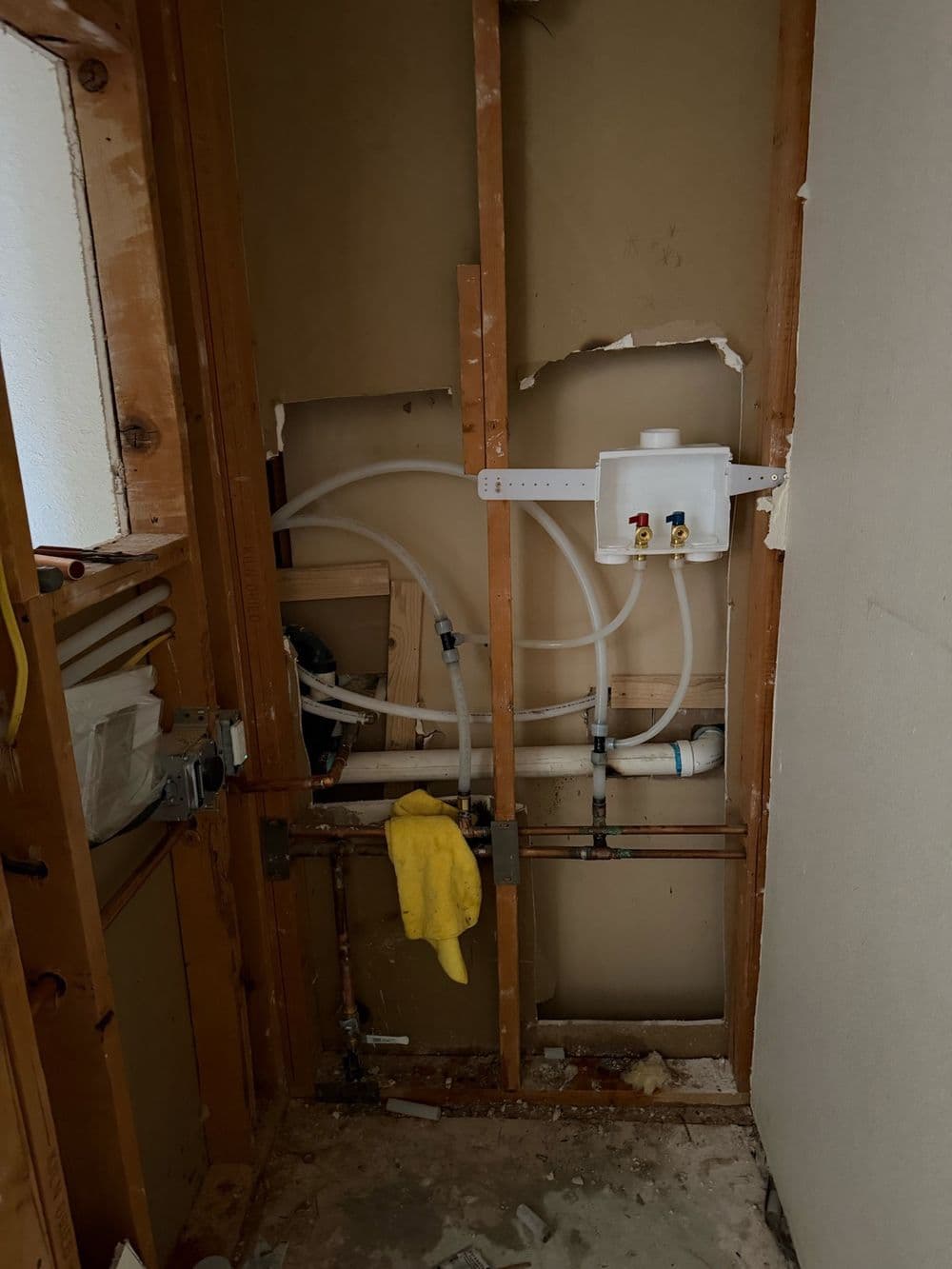
There's middle ground too. A partial repipe replaces just the worst runs, like one bathroom, the kitchen or the laundry. Our repiping service page lays out every option at more than one price point, and our plumbing leak repair page covers single leaks in walls, slabs and yard lines.
What should you do if you find a pinhole leak?
Stop the water first, then get it looked at. Here's the order:
- Shut off the water at the main, or at the fixture's shut-off valve if the leak is near one.
- Keep water away from outlets and anything electrical, and only touch the breaker if you can do it safely.
- Take photos of the damage in case you file an insurance claim.
- Call a licensed plumber to find the leak and give you the price before any work starts.
A clamp from the hardware store can slow a pinhole down, but it's a patch, not a repair. The fix is cutting out the bad section and putting in new pipe.
The bottom line
Pinhole leaks in copper pipes come from corrosion working from the inside out, helped along by water chemistry, speed, pressure and leftover debris. One pinhole is one repair. Leak after leak is the pipe telling you it's worn out. Nobody here works on commission, so we'll tell you straight which one you've got.
Found water where it shouldn't be? Call us at 725-254-0089 or send a request.
Quick Answers
Can a pinhole leak fix itself?
No. Minerals in the water can plug a pinhole for a while, but the corrosion behind it keeps going and the hole comes back bigger. It needs a real repair.
Does one pinhole leak mean I need to repipe?
Not usually. One leak is one repair. A repipe is worth talking about when leaks keep showing up in different spots or the pipe is corroded all over.
Can high water pressure cause pinhole leaks?
It can add to the problem. Pressure higher than the house was plumbed for puts extra stress on thin spots and fittings, so it's worth having the pressure and the regulator checked when you find one.
Will insurance cover a pinhole leak?
That depends on your policy, so check with your insurance company. If you've got a claim going, tell us and we'll work with you and your insurer on it.
Do you fix pinhole leaks after hours?
Yes. We answer the phone 24/7, and we give you the after-hours rate before we head out.
Do you warranty leak repairs?
Yes. Workmanship is warrantied for one year in Nevada and two years in Arizona.
Want Us to Take a Look?
Upfront price before we start. Nobody here works on commission.